 Geranium lucidum L. is a plant of the family of Geraniaceae, which lives in hedges, bushes and rocks. It is characterized by having creepning or erect stems about 10-30 cm. Geranium has green leaves in disposition of resette. The plant contains actinomorphic, pentamer and pinkish flowers,This flowers have entomohilous pollination, that is to say, realiced by insects. We can know how is the pollination because the tubular corolla and the colour of the flowers. this flower has a superior and pentacarpellary ovary which giving rise a indehiscent nut, schizocarp, divided into five parts, called mericarps each with a seed. the seed has a dispersion barocora. the biotype is terofito, the plant is underground during the unfavorable time and it comes out when the conditions are favorable for her life. The plant presents a distribution southern Europe, it is abundant in the Iberian Peninsula.
sábado, 14 de maio de 2016
Geranium lucidum L.
Geranium lucidum L. is a plant of the family of Geraniaceae, which lives in hedges, bushes and rocks. It is characterized by having creepning or erect stems about 10-30 cm. Geranium has green leaves in disposition of resette. The plant contains actinomorphic, pentamer and pinkish flowers,This flowers have entomohilous pollination, that is to say, realiced by insects. We can know how is the pollination because the tubular corolla and the colour of the flowers. this flower has a superior and pentacarpellary ovary which giving rise a indehiscent nut, schizocarp, divided into five parts, called mericarps each with a seed. the seed has a dispersion barocora. the biotype is terofito, the plant is underground during the unfavorable time and it comes out when the conditions are favorable for her life. The plant presents a distribution southern Europe, it is abundant in the Iberian Peninsula.
luns, 4 de abril de 2016
Types of Mutualism
The mutualism is the relationship between two species in which both are benefited. the two species are provided, each other, birth rates higher and/or lower rates of mortality or a higher load capacities. There are different types of mutualism:
1. Optional: the species can live without their respectives mutualistic. this is the case of crab and moray, the crab feeds of the parasites of moray, and the moray is deloused.
 2. Obliged: the species can not live without their mutualistic. For example, the lichens(organism consisting of a mushroom and an alga), in this case the mushroom need the alga for energy and the alga need the mushroom for get water.

3. Trophic: usually comprises pairs of specialized partners in complementary ways even get energy and nutrients.
4. Defensive: species include receiving food and shelter from their mutualistic partners in exchange for those partners defend against predators. this is the case of clownfish and anemones, these will give the fish a place to hide fro predators, while the anemona recives water aeration and attractin prey.

5. Dispersive: thei include animals that carry pollen between flowers in exchange for the fruit. For example, the hummingbird get the nectar and the plants get a transport means for the pollen and seeds.

1. Optional: the species can live without their respectives mutualistic. this is the case of crab and moray, the crab feeds of the parasites of moray, and the moray is deloused.


martes, 8 de marzo de 2016
Rosalind Franklin

Rosalind Franklin fue una química y cristalográfica inglesa, autora de importantes contribuciones en el conocimiento del DNA, obtuvo las imágenes por difracción de rayos X que revelaron la forma de doble hélice de la molécula de DNA (Fotografía 51), aunque ella no llego a esta conclusión, por causa de la filtración de su trabajo. Tras estudios, basados en la imagen fueron Watson y Crick los que concluyeron la estructura del DNA, lo que les dio el nobel años mas tarde. Asimismo, Franklin trabajo en imágenes del RNA, de los virus, del grafito y del carbón. Estos descubrimientos tuvieron un importante impacto científico, aun así no se reconoció su trabajo con el DNA. Si se reconocieron sus trabajos con el carbón y el grafito.
mércores, 2 de marzo de 2016
Red Panda
 The red panda, Ailurus fulgens, is an arboral mammal, who live in Asia, in the Himalaya mountains, the north of Birmanian Nepal, India and China. He is small, 50-64 cm, and he has a reddish brown coat. This panda has a short legs and a long tail with rings, which provides a means of camouflage and protects him from the cold. The red panda, like a common panda feeds of bamboo, but also feed on roots, fruit or eggs. They are very quiet animals and lonely, except in mating season.Winter marks the biginning of mating season, the cuple is paired, when the female acept the male. After the gestation last about 112-158 days, and the females, usually, have babies in spring or summer, normally between one and four. The babies remain in their lair until 90 days, while their mothers care for them. Male panda isn't interested in their offspring.
At the present, the red panda is theretened by deforestation, the agriculture and the stealthy . He is included in the red list of UICN.
xoves, 25 de febreiro de 2016
Ginkgo biloba
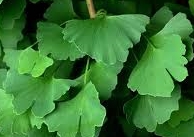 El Ginkgo biloba es un árbol propio de China, aunque se utiliza en ornamentación y podemos encontrarlo con facilidad en muchos jardines de todas las partes del mundo, gracias a su resistencia a condiciones ambientales adversas. Pertenece a la familia Ginkgoaceae, de la cual es el único representante vivo, ademas, se clasifica en el grupo de las gimnospermas arbóreas y se caracteriza por ser un árbol caducifolio, dioico, de hasta unos 30 m. de altura. sus hojas son de color verde claro, el cual se torna en amarillento en el periodo de caída de las hojas, con un tamaño entre los 5 y los 15 cm., son planas y tienen forma de abanico, con nervadura dicotómica y en algunos casos con lóbulos
El Ginkgo se caracteriza por la presencia de sexos separados, los cuales podemos diferenciar por sus estructuras. En el caso del ejemplar masculino podemos ver inflorescencias amarillas agrupadas, que nacen de los brotes cortos. Al contrario, en el ejemplar femenino observamos flores en grupos de dos o tres, las cuales producen una semilla blanda de color marrón amarillento y textura carnosa, al abrir dichas semillas desprenden un olor molesto, por lo que en ornamentación y jardinería es difícil encontrar un ejemplar femenino.
El ciclo reproductivo del Ginkgo consiste en la producción de inflorescencias, tanto en el caso del individuo masculino como en el femenino. La inflorescencia masculina originara micrósporas que darán lugar al grano de polen o gametofito masculino. Y las inflorescencias femeninas originaran megásporas, las cuales originaran posteriormente los arquegonios, en los cuales se producirá la fecundación. Una vez producida la fecundación se origina el embrión, el cual formara la semilla y esta a su ver originará la planta.

El dicho árbol tiene una gran importancia en China por sus aspectos medicinales, ya que es empleado para mejorar la circulación, para el cerebro y para los oídos, y su simbología, en este país es considerado un arbol sagrado.
xoves, 11 de febreiro de 2016
Pez Escalar (Peterophyllum scalare)

El pez escalar, también conocido como pez Ángel, es un pez
de agua dulce, que se distribuye por el río Amazonas y algunos de sus
afluentes. Además necesita que el agua tenga un pH de entre 6 y 8, y una
temperatura de 24 a 30 ºC. Estos peces tienen preferencia por aguas donde haya
amplia vegetación y troncos, teniendo así lugares en los que esconderse ante
alguna señal de peligro. En relación a su morfología, suelen ser peces de unos
15 cm, con cuerpo aplanado dorsalmente y presentan todo tipos de colores.
En lo que se refiere a la reproducción del escalar, sucede
cuando el pez tiene aproximadamente 6 meses, este proceso es de fácil
observación, ya que en el momento de la puesta la pareja de escalares se separa
del resto de peces y elige un sitio adecuado para la misma. En ese momento
comienzan la defensa del lugar escogido, normalmente es realizada por el macho,
aunque en ocasiones la hembra también se ocupa de esta función, y la limpieza
del lugar, normalmente desempeñada por la hembra. A continuación la hembra
depositara los huevos en el lugar elegido y el macho los ira fecundando. Pueden
poner entre 200 y 800 huevos, dependiendo de la experiencia y tamaño de los
progenitores. Si los padres ven a sus huevos amenazados por otros peces pueden
llegar a comérselos. Posteriormente, unos tres días después nacerán los
alevines, y tardaran otros dos días, aproximadamente en poder nadar.
A continuación podemos ver un vídeo de un pez escalar (Waly) en un acuario con otros peces.
martes, 2 de febreiro de 2016
Mycobacterium tuberculosis

Mycobacterium tuberculosis est une bactérie responsable de la plupart des cas de tuberculose du mond, et elle est une gran probleme, parce que son propagation est dans l'air. Cette bactérie se caractérise par être une gram positif, avoir une taille entre 0,2-0,7 micrometros, c'est une aérobie stricte, immobile, et pas de formation de spores ou de capsule. Elle put survivre pendante des mois dans un endroit frais sombre, et pendant des semaines sur les materiaux, les cadavres, le papier ou les vêtements. Elle est très sensible à la chaleur, la lumière du soleil e de la lumière ultraviolette, mais est resistant au froid et congélation. C'est important de savoir que dans unes conditions défavorables peuvent entrer en hibernation.
Leur cycle de vie consiste en que lorsqu' elle arrive à les poumons est ingérée pour les macrophages alvéolaires, mais cettes ne sont pas capables de detruire les bactéries. Leur paroi cellulaire empêche l' union du phagosome avec le lysosome, cette union donnerait lieu à la degradation du microorganisme. Cependant, Mycobacterium tuberculosis permet la fusion des vésicules remplis des nutriments, en consequence les bactèries se multiplient dans l' interior de la cellule, et la infection se propage par les alveoles de les poumons.

Vous pouvez voir l'action de cette bactèrie sur le lien suivant (il est en espagnol):
http://www.biologia.edu.ar/animaciones/temas/patogenos/Mycobacterium.html
Subscribirse a:
Publicacións (Atom)