mércores, 1 de febreiro de 2017

Les Trilobées

Trilobées sont le groupe d'arthropodes, le plus primitive, qui, actuellement, est éteinte, sont animaux marins et principalement benthique. Ils sont caractérisés par un corp en arrière-ventral aplati et divisé en trois parties appelé tagmas:
  1. Cephalon: qui est formé par un élèment non segmenté, le Acron, un segment antennaire et quatre segments avec annexes birrameos (avec deux axes). Dorsalement les segments sont fusionnés et ils forment un bouclier de tête, avec un paire d' yeux composés.
  2. Soma ou poitrine: qui est formé par un nombre variable de segments articulés et avec annexes.
  3. Pigidio: est formé par plusierus segments de taille décroissante, et fusionnés à nouveau.
Aussi, dans le corp du animal se distinguent trois lobées, séparés par rainures antéropostérieurs, un lobée demie et deux lobées côte. C'est ce characteristic la quelle le donne le nom au groupe.


sábado, 8 de outubro de 2016

Catharanthus roseus

Catharanthus roseus o vinca de Madagascar es una planta herbácea nativa de Madagascar, que puede alcanzar 1 m de altura. Caracterizada por presentar hojas verdes, dispuestas de forma opuesta, y tiene flores bisexuales, de color purpura o blanco, pentámeras y con corola en forma alargada. Sus frutos son folículos de 2 a 4 cm de largo. 

Esta planta es muy relevante en investigación de patologías vegetales, ya que es fácil de infectar y presenta síntomas simples de reconocer. Ademas produce sustancias alcaloides como la vinblastina y la vincristina que se usan para tratamientos de leucemia, ya que interfieren en la división de las células cancerígenas. No obstante, la planta puede ser toxica, si se ingieren grandes cantidades, y alucinógena.  

venres, 29 de xullo de 2016

Common blackbird (Turdus merula)

Common blackbird is a bird of passerine that is distributed by almost everyone, and live in forest or garden areas. The bird has a size long of 24-26 cm and a wingspan of 34-39 cm. It is characterized by a black (males) or dark brown (females) body, and orange (males) or yelow (females) birdmounth. Their diet is varied, they eat insects, earthworms, seeds and fruits.

The reproduction period of Turdus merula L. is the mounths of March to July, the first pass for the proces of reproduction is the coupler, where the male realiced a special movement, he run with a head movement. The female remain motonless until mating. Their could make tow to three placed with tow to six eggs. Although few chicks manage to survive. The incubation period last 12 or 14 days and chicks are in the nest 19 days, approximately.    

venres, 22 de xullo de 2016

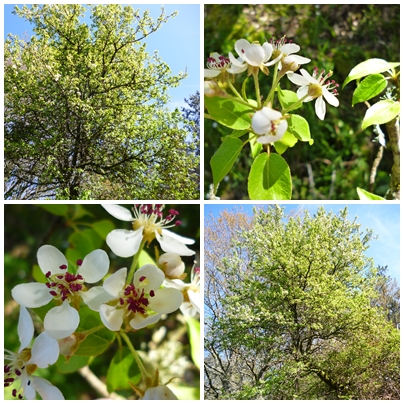
Crataegus monogyna Jacq.

Crataegus monogyna Jacq., conocido comúnmente como  espino, es una plana que crece en matorrales, bosques y bordes de ríos. Esta distribuido ampliamente por Europa y norte de África. Es un árbol caducifolio de la familia de las rosáceas, de un tamaño medio de 5 m. Se caracteriza principalmente por tener espinas en el tallo, de ahí su nombre común. Tiene hojas simples dispuestas de forma alterna, flores blancas dispuestas  en inflorescencias de tipo corimbo, toda las flores están a un mismo nivel. Estas flores presentan una polinización zoogama entomófila, realizada por  himenópteros. Los frutos son bayas de color rojo oscuro, que se dan en   y de aproximadamente 1 cm., los cuales contienen una sola semilla, de su dispersión también se encargan los animales, es decir, es zoocora.


martes, 19 de xullo de 2016

Torpedo torpedo

Torpedo torpedo est un poisson cartilagineux qui peut avoir une taille d'environ 70 cm, il a un corps arrondi aplati, avec une longue et forte queue. Le torpedo est de couleur marron avec cinq ocelos sombre et autres ocelos de couleur claire. Sa paricularité est qu'il ont des organes électriques situes dans la partie inférieure des côtés du corp. Le poisson utilise ces organes  pour se chasser et se débrouiller. Ils mangent crustacés, mollusques et petits poissons. 

Les torpedo aiment vivre dans les fonds, bien qu'ils pouvent être trouvés dans tooute la colonnne d'eau. Une autre caractéristique est qu'ils sont vivipares et  ils ont une pétiode de gestation de 7-10 mois, peut avoir jusqu' à 32 enfants dans un coucher de soleil.

sábado, 14 de maio de 2016

Geranium lucidum L.

Geranium lucidum L. is a plant of the family of Geraniaceae, which lives in hedges, bushes and rocks. It is characterized by having creepning or erect stems about  10-30 cm. Geranium has green leaves in disposition of resette. The plant contains actinomorphic, pentamer and pinkish flowers,This flowers have  entomohilous pollination, that is to say, realiced by insects. We can know how is the pollination because the tubular corolla and the colour of the flowers.  this flower has a superior and pentacarpellary ovary which giving rise a indehiscent nut, schizocarp, divided into five parts, called mericarps  each with a seed. the seed has a dispersion barocora. the biotype is terofito, the plant is underground during the unfavorable time and it comes out when the conditions are favorable for her life. The plant presents  a distribution southern Europe, it is abundant in the Iberian Peninsula.


luns, 4 de abril de 2016

Types of Mutualism

The mutualism is the relationship between two species in which both are benefited. the two species are provided, each other, birth rates higher and/or lower rates of mortality or a higher load capacities. There are different types of mutualism:

1. Optional: the species can live without their respectives mutualistic. this is the case of crab and moray, the crab feeds of the parasites of moray, and the moray is deloused.

2. Obliged: the species can not  live without their mutualistic. For example, the lichens(organism consisting of a mushroom and an alga), in this case the mushroom need the alga for  energy and the alga need the mushroom for get water.


3. Trophic: usually comprises pairs of specialized partners in complementary ways even get energy and nutrients.

4. Defensive: species include receiving food and shelter from their mutualistic partners in exchange for those partners defend against predators. this is the case of clownfish and anemones, these will give the fish a place to hide fro predators, while the anemona recives water aeration and attractin prey.

5. Dispersive: thei include animals that carry pollen between flowers in exchange for the fruit. For example, the hummingbird get the nectar and the plants get a transport means for the pollen and seeds.